
No products in the cart.

Violet Audio Expands dMix 128 with Integrated MCP Server
FOR IMMEDIATE RELEASE
Violet Audio Expands dMix 128 with Integrated MCP Server, Advancing Intelligent Control for Modern Audio Workflows
— New feature expands integration, automation, and AI-ready control capabilities across live sound, broadcast, installed audio, and enterprise AV applications—
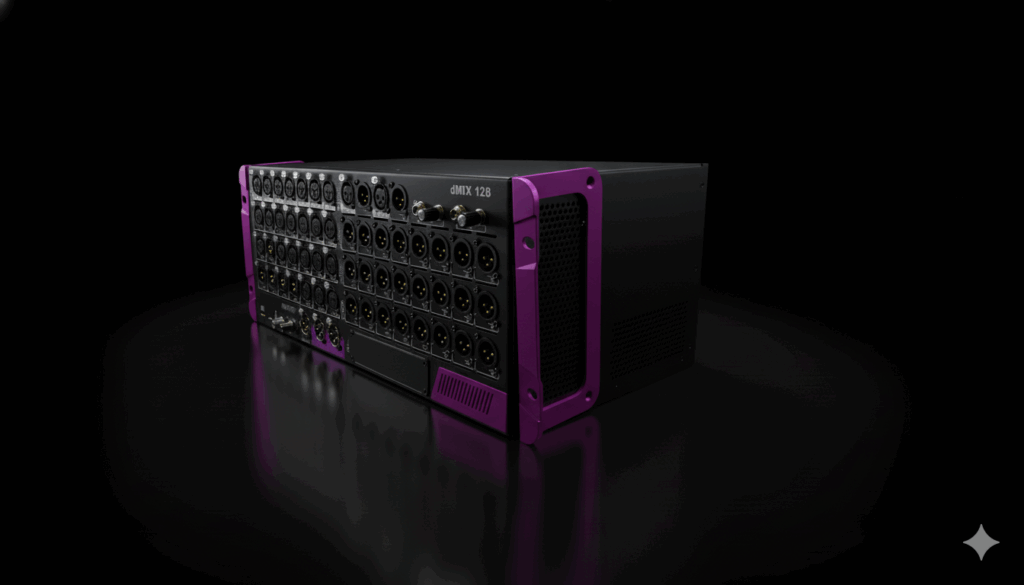
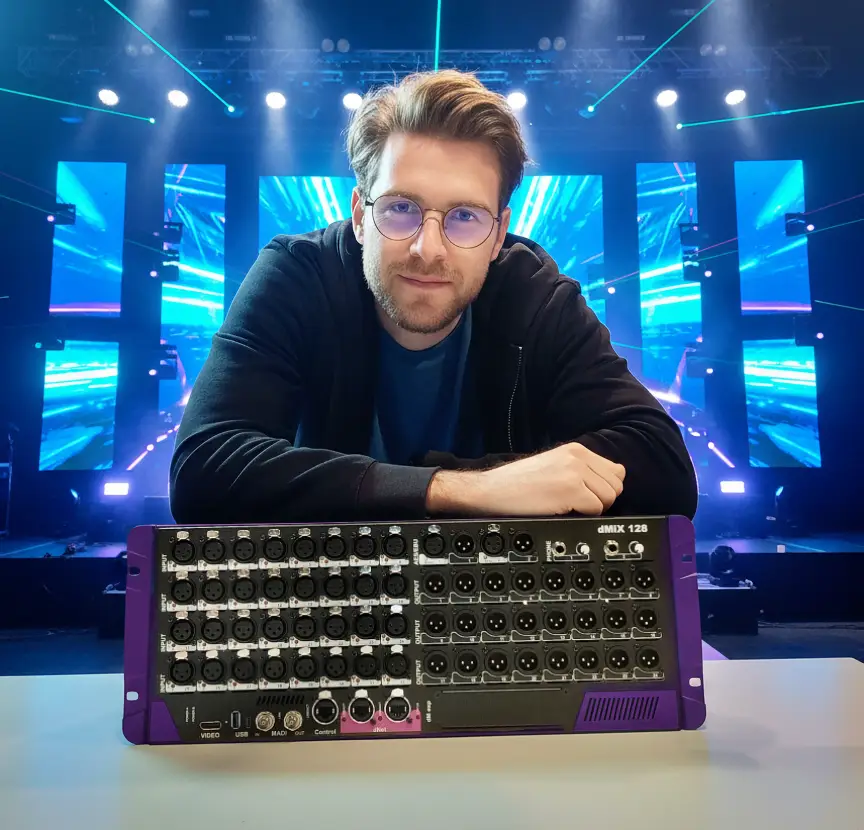
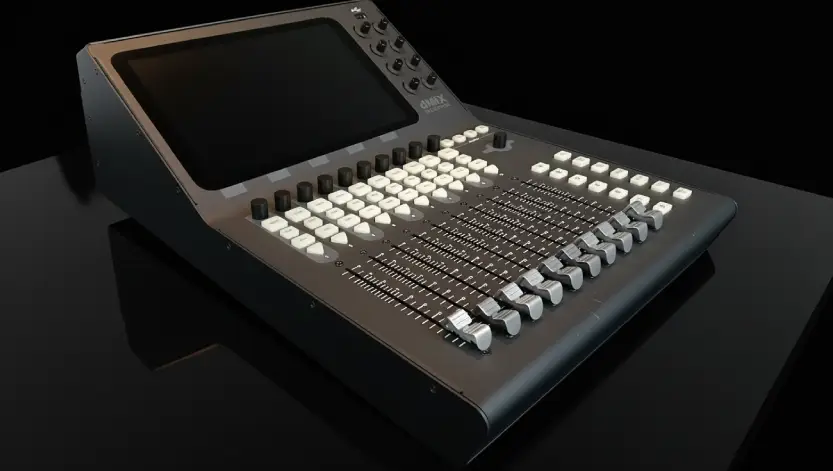
LOS ANGELES, CA, DATE— Violet Audio has announced the addition of a built-in Model Context Protocol (MCP) server to its dMix128 Digital Mixer platform, further expanding the system’s ability to integrate with software applications, control systems, automation platforms, and emerging AI-assisted workflows.
Running directly within the mixer, the MCP server complements the dMix128’s browser-based control architecture, OSC server, QRC/JSON control framework, AES67 networking, SMPTE ST 2110-30 support, and NMOS integration, creating a highly connected platform for modern audio environments.
“At Violet Audio, we focus on building products that solve real problems while anticipating where the industry is heading,” said Danny Olesh, Founder of Violet Audio. “Professional audio systems are increasingly expected to communicate with control systems, automation platforms, network infrastructure, and now AI-assisted technologies. Integrating MCP directly into dMix128 is another step toward creating a platform that is both incredibly powerful and remarkably easy to integrate.”
As audio systems become increasingly connected, users require more flexible methods of controlling and managing complex workflows. MCP provides a structured framework that allows external systems to communicate with the mixer in a more human-readable and context-aware manner.
Phil Wagner, Violet Audio US President/CEO stated, “The new MCP server functionality within our dMix 128 architecture is the first full scale mixing platform capable of AI assisted operation and workflow management tools providing real-world assistance for a wide range of applications. It’s amazing when you see it in action.”
Using simple, natural-language style commands, operators can perform tasks such as muting all lobby loudspeakers, increasing the lectern microphone level by 2 dB, recalling a Sunday service scene, identifying channels approaching clipping, routing stage inputs to a dedicated broadcast mix, or configuring the system for virtual soundcheck.
While professional engineers retain full access to the comprehensive dMix128 mixing environment, MCP also enables simplified control interfaces for venue managers, volunteers, facility operators, automation systems, and future software-driven applications.
The addition of MCP further strengthens the dMix128’s appeal for systems integrators and technology managers seeking open, interoperable solutions capable of adapting to evolving operational requirements.
In addition to MCP, the dMix128 supports OSC control, browser-based operation, QRC/JSON system control, AES67 networking, SMPTE ST 2110-30 audio transport, NMOS discovery and connection management, MADI connectivity, and CoreAudio/ASIO recording interfaces. This flexibility allows the platform to serve live sound, broadcast, installed audio, worship, education, esports, government, and enterprise AV applications from a single hardware ecosystem.
“One of Violet Audio’s core principles is developing products that solve real-world challenges while simplifying the user experience,” added Olesh. “Integrators increasingly need systems that are open, controllable, and adaptable. With MCP joining OSC, browser control, AES67, SMPTE ST 2110-30, and NMOS, the dMix128 can function as a professional live console, an installed audio processor, a broadcast audio hub, or a network-connected control platform.”
The addition of MCP reflects Violet Audio’s broader vision for the dMix128 as a platform that supports multiple users and operational models simultaneously. Whether supporting advanced front-of-house mixing, streamlined venue operation, sophisticated broadcast routing, integrated facility control, or future AI-assisted workflows, the dMix128 continues to evolve to meet the demands of modern audio production.


Leave a Reply