No products in the cart.

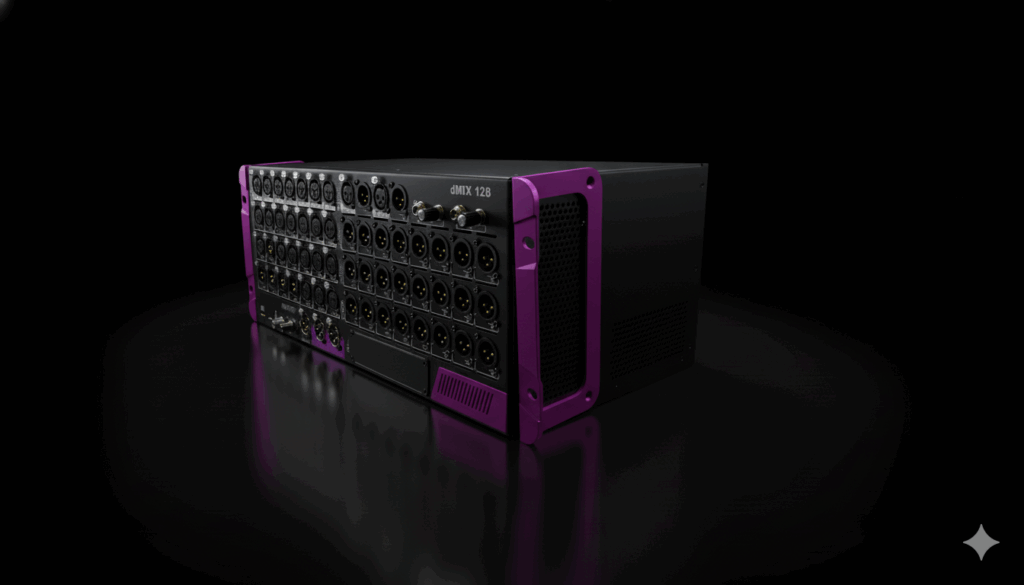
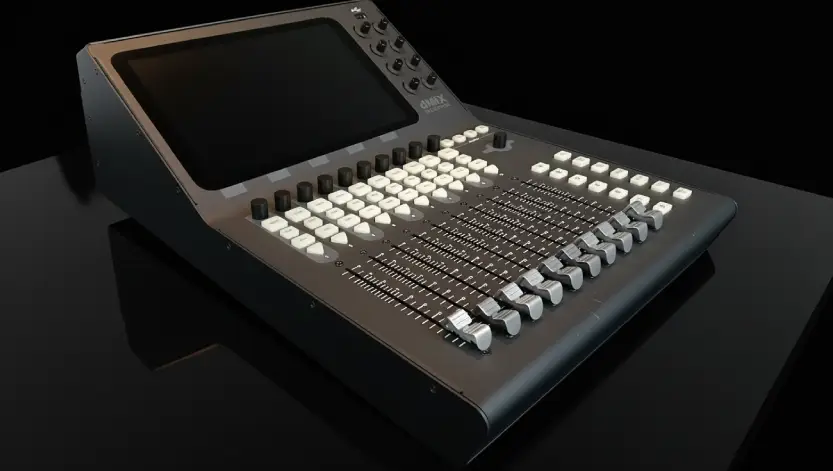
dMix 128 V1.2.3 firmware now available
This release brings full AES67 / NMOS networked-audio support with a new routing engine and streams page, a dynamic EQ / de-esser with a live curve overlay, an online / offline status indicator, and a wide range of mixer, interface, and stability improvement
NEW – Learn more about the dMix 128’s Dante and AES67 Streams HERE
FIRMWARE RELEASE NOTES
dMix 128 firmware
now available.
V1.2.3
VIOLETAUDIO.COM/SUPPORT
01 / NETWORKED AUDIO
AES67 & NMOS
- Dedicated Streams page for managing networked audio — create and monitor TX / RX audio-over-IP streams. Pick up Dante / Ravenna / ST 2110-30 sources directly via SAP discovery, or transmit with custom sample rate, channel count, packet time, and destination address.
- AMWA NMOS bridge — IS-04 discovery, IS-05 connection management, IS-08 channel mapping.NEW Allows dMix to be discovered, configured, and routed directly by standard broadcast control systems.
- Continuous registry discovery and network advertisement, with RX shown from the stream list and TX auto-showing its assigned multicast address.
- IS-08 channel mapping aligned to the mixer's real routing, plus discovery hardening — no CPU spikes when a registry is unreachable.
- PTP domain and Grandmaster priority are now user-configurable, for integration into networks with distinct PTP domains such as ST 2110-30, with direct control over clock hierarchy.
02 / ROUTING
Signal Routing
- Routing v2 — a reworked, grid-based routing page consolidating input, output, and matrix routing into a single, more detailed view, including channels from network streams. Hold and drag across the grid to patch or remove channel ranges in one motion.
- Insert-sends can now target stream (TX) destinations, local or remote.
- Cleaner routing-grid interaction — a diagonal double-click now requires both clicks on the same cell.
03 / AUDIO ENGINE
DSP & Effects
- Dynamic EQ / de-esser now features live curve visualization on the EQ display, replacing the previous bar-graph gain-reduction meters.
- New RTA smoothing filterPREVIEW — included in this release but not yet enabled.
- Updated DSP engine, with a stereo compressor / gate metering fix and a delay-FX subdivision fix.
- Fixed reverb controls in FX Racks 9 and 10, and corrected reversed damping control behaviour on the DX-480 reverb.
04 / MIXER
Mixer & Interface
- Online / offline connection-status indicator.NEW Quick visual confirmation of device connectivity.
- Scene load / save is now scoped to the active show; selective-load groups have been reorganised into finer categories, with visibility fixes.
- Restyled upgrade screen to match the mixer theme.
- Interface tidy-up — consistent "dMix128" page title, with not-yet-ready controls (import / export, firmware upload) hidden until implemented.
- Refined channel copy / paste — correct handling of sub-mask, insert, and slot keys.
05 / FIXES
Bug Fixes
- Solo exclusive mode now correctly clears the linked channel. #176
- Hot Channel behaviour corrected.
- Channel copy / paste no longer carries across the wrong sub-mask, insert, or slot state.
- Eliminated the likelihood of transitory audio noise during network reconnection events.
06 / PLATFORM
Hardware & Platform
- Fan control tuned for quieter operation without compromising thermal performance.
- New Streaming Control & Routing (v2) documentation.
violetaudio
PRECISION ENGINEERED
FOR SOUND
FOR SOUND
Realse Notes:
# dMix Firmware v1.2.3 – Release Notes
## Overview
Firmware v1.2.3 builds on dMix’s AES67 networked-audio support with new NMOS integration, enhanced stream configuration and a redesigned routing interface. This release also includes a range of interface refinements, bug fixes and stability improvements.
## Audio Networking
**New Streams Page**
A dedicated interface for managing networked audio streams, built for interoperability with third-party AoIP devices. On the receive side, dMix can now pick up Dante/Ravenna/ST 2110-30 streams directly using SAP discovery; on the transmit side, users can create streams with custom sample rate, channel count, packet time, and destination address.
**AMWA NMOS Integration**
dMix now implements the AMWA NMOS specifications IS-04 (discovery and registration), IS-05 (connection management), and IS-08 (channel mapping). This is new to this release and allows dMix to be discovered, configured, and routed directly by standard broadcast control systems, simplifying integration into existing NMOS-managed infrastructures.
**PTP Configuration**
PTP domain and Grandmaster priority are now user-configurable. This allows dMix to be integrated into existing audio networks that use distinct PTP domains, such as ST 2110-30 environments, and gives integrators direct control over clock hierarchy in multi-device network environments.
## Routing
**Routing v2**
A new grid-based routing page consolidates all routing into a single, more detailed view. Channel ranges can be patched in one motion by holding and dragging across the grid, and existing patches can be removed the same way. The page covers input, output, and matrix routing, and includes the channels from network streams, making it straightforward to route network audio alongside local IO.
## Mixer and Interface
– Dynamic EQ and De-esser now feature live curve visualization, replacing the previous version’s bar-graph gain-reduction meters.
– Scene recall now supports finer-grained selective loading, allowing more precise control over which parameters are restored.
– A new offline indicator gives quick visual confirmation of device connectivity status.
## Platform
– Fan control has been tuned for quieter operation without compromising thermal performance.
## Fixes
This release resolves several issues from previos version:
– Fixed channel preset copy/paste issues affecting Dynamic EQ and subgroup assignment.
– Fixed subdivision control behavior in Delay FX Racks.
– Fixed reverb controls in FX Racks 9 and 10.
– Corrected reversed damping control behavior on the DX-480 reverb.
– Eliminated the likelihood of transitory audio noise during network reconnection events.